Rust solo builder against 200 hunters
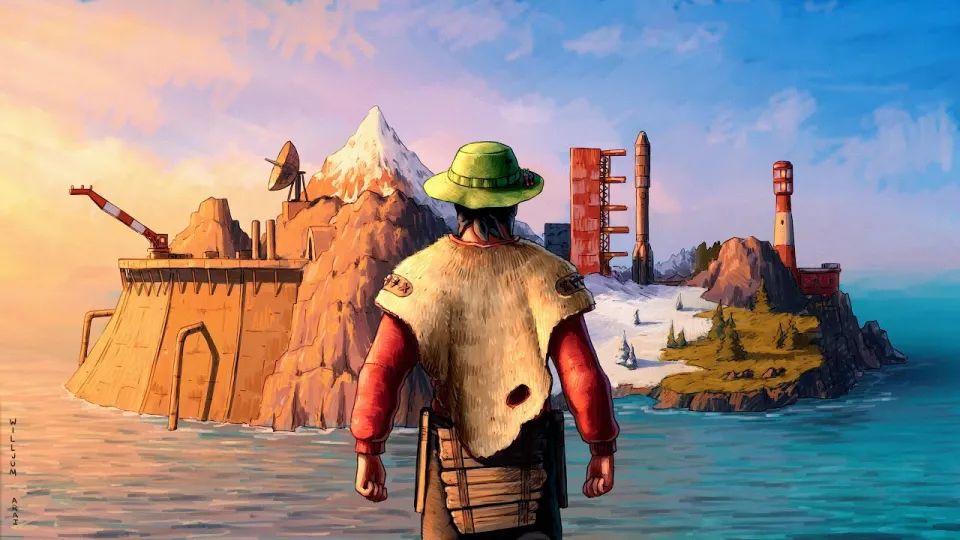
Video: When a Solo Rust builder Vs 200 Hunters...
Want articles like this for your own video to promote it on YouTube and Google? Order them through the Telegram bot @sat_sit_bot. The bot writes and publishes the articles itself (with your YouTube video embedded) on popular topical websites (no ads). Try it free: 50 articles on us.
· based on the channel Willjum
Rust is a survival sandbox where a solo builder normally loses to numbers, so the interesting question is how one player survives a server-wide hunt. The answer is preparation and base design: a solo builder who plans a compact, layered base, farms efficiently and avoids open fights can outlast a crowd that is disorganised, even when that crowd numbers in the hundreds. Willjum's "When a Solo Rust builder Vs 200 Hunters..." puts exactly that idea on screen, and the run is a useful case study for anyone who plays alone. If you want to support more experiments like it, the channel's Patreon page is where that happens.
What the solo versus 200 hunters format actually is
The format is a mass-event challenge: one builder gets time to prepare while a large group of hunters is tasked with finding and raiding them. In practice it turns Rust into a siege game, where the solo player's job is not to win firefights but to make every raid attempt expensive. The number 200 is the headline, and it matters less as a literal count of attackers online at once and more as a measure of pressure: constant scouting, repeated raids and no safe hour to farm. That is why the run reads as a base-building story rather than a PvP montage, and why viewers kept asking for a sequel with stricter rules.
Preparation beats aim in a one-against-many raid
Preparation is the only lever a solo player fully controls, and it should be spent in a fixed order. A workable priority list for a defence-oriented run looks like this:
- Secure a starter base within the first hour and keep it boring — small footprint, no obvious loot room.
- Farm stone, wood and metal in short trips with a nearby stash so a single death costs little.
- Push the key blueprints first: building plans, metal tools, medical supplies and the weapons you can actually craft in bulk.
- Craft surplus doors, locks and repair materials before the pressure starts, not during a raid.
- Keep a second, hidden fallback base with a sleeping bag and a small cache of gear.
Ammunition and gear matter, but quantity of consumables matters more. A solo defender who can reseal a breach three times in ten minutes is harder to finish than one with a single strong weapon and no spare doors.
Base design that survives a crowd
Base design is the difference between a long run and a five-minute raid, and the guiding rule is redundancy over strength. A layered honeycomb with cheap outer walls forces attackers to spend explosives on empty space, while a compact core keeps the total footprint small enough to defend alone. Practical choices that pay off:
- Multiple loot rooms, none of them adjacent to the front door.
- Shooting floors or peek windows that let you punish a breach without stepping outside.
- Doors on every layer, so a lost wall does not equal a lost base.
- A separate bunker or stash for tools and spare kits.
- No decorative windows on the side attackers will approach from.
A big, impressive base is a target; a modest base that is annoying to break is a deterrent. In a mass event the deterrent value is everything, because attackers choose the easiest target on the map.
Diplomacy, trading and the value of a friendly stranger
Diplomacy is a legitimate survival tool in Rust, and in a server-wide hunt it can be decisive. Not every player in a 200-person crowd is committed to the raid; some are farmers, some are curious, and some will happily trade or drop supplies for the story alone. A solo builder who talks in chat, keeps promises and never betrays a small favour builds a reputation that occasionally turns a hunter into a supplier. The flip side is discipline: never reveal base location to someone you have not tested, never accept a trade inside your own compound, and assume any generous offer could be bait. Reputation is slow to build and instant to lose.
Why viewers want a sequel with different rules
The most common reaction to the run was a demand for more: the same challenge as a duo or trio, a version with a longer preparation window, or a series with rotating creators. That feedback points at the real weakness of the format, which is that a single run has no established benchmark. A longer prep phase, for example, would shift the balance toward base depth and away from improvisation, and a duo version would test whether two builders can coordinate under the same pressure. A series would also let viewers compare designs directly instead of judging one base in isolation.
Common questions about solo survival under pressure
Is a solo player supposed to win against a large group? No, and treating it as a win condition misses the point. The measurable goal is survival time and cost imposed on attackers: how many explosives were spent, how many raids failed, how long the base stood.
Should you fight or hide when hunted? Hide first and fight only when the fight protects something. Every unnecessary gunfight gives away your position and costs gear you cannot replace quickly as a solo player.
How much time should preparation take? Enough to finish blueprints and stock spare doors, not enough to build something that looks worth raiding. In event formats a fixed prep window is fairer than an open-ended one.
Does a friendly server community actually help? Sometimes, and that is enough. A single delivery of tools or explosives materials can extend a run by hours, which is why reputation management belongs in any solo plan.
Useful links
- Willjum on Patreon — support for the channel's videos and experiments.
- https://www.twitch.tv/willjum — live streams.
- https://twitter.com/willjum1 — updates and announcements.
- http://creativecommons.org/licenses/by/4.0/ — the licence used for some of the music in the video.
Final thoughts on the solo builder challenge
This run works because it treats Rust as a planning game rather than a shooting game, and that framing is portable to any wipe. Build small, build layered, stock spares, keep a fallback, and treat every stranger as either a risk or a resource — rarely both at once. The channel "Willjum" is the author of this experiment, and the format clearly has room to grow into a series with fixed prep windows and rotating creators. If you want to see more of that work, consider supporting it through Patreon.
Key takeaways
- One solo player builds and defends against roughly 200 hunters on the same server.
- Preparation is the whole game: farm, blueprints and a compact base matter more than aim.
- A layered, cheap-to-repair base beats one expensive shell that cannot be resealed.
- Supplies from friendly players and quiet trading can matter as much as loot.
- The format works best as a repeatable event with a fixed prep window and clear rules.
Source: When a Solo Rust builder Vs 200 Hunters... · Markdown version
Questions & answers
What is the solo builder versus 200 hunters challenge in Rust?
It is a mass-event format where one player gets time to prepare a base while a very large group of hunters tries to find and raid it. The solo player's goal is survival time and cost imposed on attackers, not kills. It turns a normal wipe into a siege scenario.
How should a solo player prepare for a server-wide hunt?
Prioritise a small starter base, short farming trips with nearby stashes, and key blueprints like building plans, metal tools and medical supplies. Craft spare doors, locks and repair materials before the pressure begins. A hidden fallback base with a sleeping bag and spare kit is essential.
What base design works best when outnumbered?
Layered honeycomb with cheap outer walls, multiple loot rooms away from the entrance, and doors on every layer. Keep the footprint compact so one player can defend it, and add a separate stash for tools and kits. A modest base that is annoying to break beats an impressive one that attracts raiders.
Can diplomacy really help a solo player survive?
Yes, occasionally, and one friendly delivery of supplies can extend a run by hours. Talk in chat, keep promises and never betray small favours, but never reveal your base location to untested players. Treat generous offers as potential bait and trade away from your compound.